Friday, September 11, 2009

Khmers de l'étranger : la nouvelle génération de retour ? (1/2)

Below is an interesting article about Khmer overseas of the second generation who wanted to go back and work in Cambodia. It is in French...
The original article is excerpted from ka-set.info:

http://ka-set.info/actualites/cultures-et-societe/cambodge-khmers-cambodgiens-diaspora-rapat-090910.html


Enjoy,
Sakun
---------------------------------------------------------------------------------------------------

Par Barbara Delbrouck
10-09-2009


Pendant près de trois décennies, des Cambodgiens ont fui leur pays. Mais depuis plusieurs années, un mouvement inverse semble s'être enclenché. Les enfants de ces exilés ont grandi. Maintenant adultes, certains décident de retourner au Cambodge pour travailler, lancer un projet ou créer leur entreprise. Qui sont ces Khmers venus d'ailleurs et que cherchent-ils sur la terre de leurs ancêtres ? Ka-set est allé à leur rencontre, dans une enquête publiée en deux volets.


"Happés" par le Cambodge
Les histoires de "Khmers rapat", surnom donné aux "Khmers rapatriés" par certains Français d'origine cambodgienne, commencent souvent par un voyage. Ils ont découvert ou redécouvert le pays de leurs parents et ont décidé d'y rester. Temporairement ou pas. C'est le cas d'Auray Aun, directeur régional adjoint de "Aide et Action", une ONG française spécialisée dans l'éducation. Il y a huit ans, il quitte un poste bien rémunéré dans une société publicitaire à Paris pour monter un projet aventureux avec un ami : faire le tour de l'Asie et de l'Amérique latine, à la rencontre d'ONG actives dans l'éducation. Le pays du sourire constitue une des étapes de leur périple. "C'était un moment très fort, se souvient Auray. J'ai été accueilli par ma famille. Et j'ai vraiment aimé ce que j'ai vu. Les gens, le pays… C'était magique. A tel point que mon compagnon de voyage a eu peur que je reste ! On a bien sûr terminé le voyage ensemble, mais à la fin de mon séjour au Cambodge, il était clair que je reviendrais y travailler."

C'est aussi le cas de Rapytha, la quarantaine, franco-khmère, qui à la suite d'un voyage dans la région, dont à peine deux jours au Cambodge, a décidé de "venir tenter le coup" ici avec son mari, français, et leurs deux enfants. Elle travaille à l'aéroport de Phnom Penh depuis quatre ans. "Maintenant, on est là pour s'installer. On ne se demande plus chaque année si on va repartir".

Franck Touch, de mère française et de père cambodgien, est lui revenu sur la terre de ses ancêtres il y a sept ans et a créé la société d'informatique Khmer Dev à Phnom Penh. Lors d'un voyage touristique avec sa mère en 2001, celle-ci entame des recherches sur la famille de son défunt mari, dont ils n'ont plus jamais eu de nouvelles depuis qu'ils ont fui le Cambodge en 1971. Munis de photos, ils partent dans sa province d'origine, Kompong Thom. Franck y retrouve son grand-père et découvre l'existence de cette grande famille, dont la moitié a péri sous les Khmers Rouges. "Je m'en rappellerai toujours, raconte-t-il avec émotion. Cela a déclenché quelque chose, ça m'a fait un déclic par rapport au Cambodge.". Dans l'avion pour rentrer en France, il décide qu'il doit "faire quelque chose au pays". A l'époque directeur d'une société d'informatique en France, il donne sa démission à peine deux mois après son retour. "Peu importe le boulot. Ce qui comptait, c'était le pays. Je voulais revenir au Cambodge coûte que coûte." Franck y sera finalement envoyé par ses patrons pour lancer une société de sous-traitance.

Et puis il y a ceux qui sont simplement restés plus longtemps que prévu, comme Putsata, journaliste khméro-américaine : "Je m'étais toujours dit que pour mes 30 ans, je reviendrais dans le pays où je suis née. Je ne savais pas comment, mais je savais que je devais trouver un moyen." Et en effet, alors qu'elle souffle ses trente bougies, elle obtient une bourse d'un an pour effectuer des recherches à l'étranger. Une année pendant laquelle elle renoue avec sa famille restée au Cambodge et enquête sur les problèmes d'éviction foncière dans la province du Ratanakiri. "Je suis tout simplement tombée amoureuse du pays, raconte avec entrain la journaliste. Il y a quelque chose qui vous accroche ici. Peut-être est-ce le fait que c'est un beau pays avec une histoire sombre, peut-être est-ce le paysage… Peut-être est-ce un peu tout, mais en tout cas j'ai été happée et quatre ans et demi plus tard, je suis toujours là."

Un rôle pour les Khmers de l'étranger ?
"Il y a différents types de diaspora, estime Auray Aun. Certains sont à la recherche d'une identité, je pense que c'est commun à tous ou la plupart, d'autres viennent travailler avec déjà quelque chose en tête, un projet de vie ou autre, et puis il y a ceux qui se sentent rejetés en France et viennent chercher quelque chose ici."

"Je voulais être confrontée à mon côté khmer et découvrir cette culture, confirme Putsata. Pour la première fois, je fais face à des questions d'identité que je n'avais pas aux Etats-Unis. Enfin, on en a toujours un peu mais ici on y est confronté tous les jours. On est forcé de les gérer et de se demander : ce matin, est-ce que je suis khmère ou américaine ?"

C'est aussi à la découverte de son identité et du pays qu'il a quitté dix ans plus tôt que Rattana est revenu. Arrivé aux Etats-Unis à l'âge de 13 ans, il a dû batailler ferme pour rattraper son retard scolaire après six ans sans école. "Tout ce que j'ai fait, je l'ai fait pour prouver que je n'étais pas stupide", confie ce "self made man", un brin de fierté dans la voix. En 1990, fraîchement diplômé d'une grande école d'ingénieur mécanique, il retourne pour la première fois au Cambodge où il décide finalement de s'installer. "Il y avait tant à faire ici. J'ai senti que quoi que je ferais, ce serait toujours au bénéfice de la société. […] L'idée est de partager ce que je sais afin, j'espère, de permettre à certaines personnes de moins souffrir."

Pour Putsata, il s'agit carrément d'assumer une part de "responsabilité". "Nous avons été assez chanceux pour pouvoir nous échapper, alors il devrait y avoir une espère de rendu à la communauté. C'est notre pays après tout !", lance-t-elle, enthousiaste. Une vision que partage Kosal, Khmer de Belgique. "Tous les jeunes de la génération 1979-1980 ont un rôle très important à jouer pour le Cambodge, estime le jeune homme plein d'idéal. Nous sommes nés après la guerre, nous avons eu l'occasion d'aller à l'école, donc ce sont des gens comme nous qui devraient retourner et donner un coup de pouce." Kosal a créé avec des cousins une association d'aide aux orphelins du Cambodge et projette de revenir s'y installer dès qu'il aura les fonds nécessaires.

En entendant ces propos exaltés, Hisham Mousar a les cheveux qui se hérissent sur la tête. "Le mode indicatif en droit est un devoir. Ils [les jeunes Khmers de l'étranger] 'n'ont' pas un rôle à jouer, mais ils 'peuvent avoir' un rôle à jouer, s'emporte le juriste, chef de projet à l'Université royale de droit et de sciences économiques. C'est vraiment difficile de se trouver dans la tourmente identitaire. Il ne faut pas créer le sentiment que les jeunes Franco-cambodgiens doivent absolument retourner au Cambodge, parce que ça risque de les déraciner. Car pour eux, le Cambodge est un pays étranger. Leur pays, c'est la France", martèle Hisham. Selon lui, si les Franco-khmers "ont un rôle à jouer" au Cambodge, c'est essentiellement en tant que Français, tout en ayant l'avantage d'être les mieux placés pour comprendre la société cambodgienne, s'ils le souhaitent.

Gare au néocolonialisme...
Cette notion de "rôle", Davy Chou estime lui aussi qu'il faut la "prendre avec des pincettes" pour ne pas tomber dans "une espèce de colonialisme". "J'ai l'impression que les gens arrivent avec une certaine hauteur, regrette le jeune cinéaste franco-khmer. Il y a une figure du sauveur que je n'aime pas trop." C'est pourquoi Davy tient à garder en tête qu'il est là autant pour apprendre que pour donner. "Ca me sert moralement de savoir qu'il y a un échange", confie-t-il. Une optique que partage Rapytha, qui essaie d'inculquer l'esprit d'initiative au sein de son équipe de travail à l'aéroport, en soulignant que les étrangers ont eux aussi des choses à apprendre.

Yoti Mousar a pour sa part trouvé au Cambodge une place dans la société qu'il cherchait en vain dans son pays d'accueil. Arrivé en France en 1981 à l'âge de 3 ans, Yoti a grandi dans les banlieues, entouré d'étrangers, comme lui. "J'étais en manque de repères total. Je ne me sentais pas vraiment français. On ne voyait que des étrangers. Pas de quoi forger une identité", témoigne-t-il. Après des années de questionnement identitaire en France, il décide de s'installer au Cambodge. Aujourd'hui responsable informatique au Centre culturel français de Phnom Penh, Joty a été élu délégué des cadres. Mais il relaie les demandes de tous les employés à la direction, notamment les Cambodgiens qui ont parfois plus de mal à se faire comprendre. "Ici, j'ai la chance de côtoyer un peu tous les milieux sociaux. Ce qui est plus difficile en France. Donc j'ai trouvé un retour vers mes racines et l'émancipation à la fois. C'est le paradoxe de mon retour".

Du manque d'intérêt à la passion pour le pays : un symptôme post traumatique?
S'il leur suffit parfois de quelques jours dans le pays pour décider de s'y installer, l'idée même d'un retour peut parfois prendre des années à mûrir dans l'esprit des Khmers de l'étranger. "Je ne me suis jamais intéressé au Cambodge de ma vie", avoue Davy, revenu pour un projet d'un an. "Jusqu'à mes 22 ans, je n'ai presque jamais posé de questions à mes parents sur le passé. Ce qui aujourd'hui me paraît dingue. Inconsciemment, il doit y avoir eu un blocage." Interrogé quatre mois après son arrivée, Davy sait déjà que son histoire avec le Cambodge n'est pas terminée : "Je sais que ma vie en sera changée. Et c'est quelque chose que je n'avais pas prévu. Pourtant c'était évident. Un an dans le pays de tes parents alors que tu n'as jamais quitté la France…"

Hisham Mousar a lui entretenu une relation d'amour-haine avec son pays d'origine avant de parvenir à trouver un équilibre. Jusqu'à ses 19 ans, il déteste tout ce qui est asiatique. "C'était comme si c'était de la démarque !", avoue-t-il. Quand il revient pour la première fois au Cambodge en 1994, il tombe pourtant complètement amoureux du pays... et d'une de ses habitantes, qu'il épouse. De la diabolisation, il passe alors à une période d'idéalisation de son pays d'origine. "J'étais dans une espèce de terrorisme culturel où je ne pensais que par extrême", analyse le trentenaire, à la fois effaré et amusé. De retour en France avec son épouse, il intègre, parallèlement à ses cours de droit, l'Institut national de langues et de civilisations orientales (Inalco), où il apprend la langue et les bases de la civilisation khmères. Il se lance à corps perdu dans la vie associative, estimant que la jeunesse cambodgienne manque de représentation en France. Avec d'autres Franco-khmers (il préfère personnellement employer le terme de "Français d’origine cambodgienne"), il participe notamment à la création de l'Union des étudiants de la section cambodgienne de l'Inalco, de l'organisation Asie-Aide à la jeunesse, du magazine "L'Ecrit d'Angkor" et du site communautaire "Les Jeunes Khmers". Après trois ans de tourmente identitaire, c'est l'écriture de ses réflexions qui permettra à Hisham de trouver son équilibre. "Ce qui m'a guéri, c'est de me dire que je n'avais qu'un seul réceptacle, un seul cerveau, et qu'il avait été forgé en France, donc j'étais français, conclut-il. A partir de là, je ne me suis plus posé la question de mon identité."

Dans un texte de neuf pages, le juriste tente de démontrer que la jeunesse française d'origine cambodgienne est essentiellement française. Selon lui, si celle-ci ne prend pas réellement conscience de son identité cambodgienne, c'est parce qu'elle "manque d'attractivité" à le faire. D'abord à cause du passé dramatique du pays, qui a brisé le transport de la mémoire. "On ne peut pas être attiré par quelque chose que l'on ne connaît pas voire que l'on ne comprend pas", argumente-t-il. En outre, l'état de développement du pays provoquerait un sentiment d'infériorité chez les jeunes Khmers de France. Or, la mise en avant de leur identité française, leur "intelligence nationale française", leur permettrait selon lui au contraire de prendre leur revanche sur cette infériorité qu'ils doivent injustement porter.

Un retour difficile pour la famille

Pour les parents, il n'est pas aisé de comprendre pourquoi leurs enfants veulent retourner dans le pays qu'ils ont eu tant de mal à fuir. Beaucoup ne sont jamais revenus et gardent une vision du pays parfois en complet décalage. C'est ce qu'a ressenti Putsata lorsqu'elle est retournée au Cambodge pour la première fois. "Ca n'était pas du tout cet endroit dangereux qu'ils [mes parents] m'avaient décrit ! La guerre est finie depuis longtemps maintenant, mais c'est la dernière image qu'ils ont gardée du Cambodge. Donc ils associeront toujours le pays à la guerre et à la souffrance."

D'autres, comme les parents de Davy, trouvent que c'est une perte de temps que leur enfant n'a pas à "s'infliger". "Elle [ma mère] avait l'impression que c'était une dette que je leur payais, une sorte de retour d'ascenseur parce qu'ils m'ont éduqué", se souvient-il toujours avec étonnement.
Le fait que leur enfant s'installe au Cambodge est paradoxalement souvent l'occasion pour les parents de dépasser leur traumatisme et d'oser pour la première fois remettre les pieds dans leur pays d'origine, comme ce fut le cas pour les parents de Putsata. "Ils commencent à comprendre et à renouer avec le pays comme ils ne l'auraient peut-être jamais fait si je n'étais pas venue ici. Je pense qu'ils avaient besoin d'une raison pour venir."

Le retour n'est jamais facile pour les exilés qui découvrent un pays complètement différent de celui qu'ils ont quitté. Certes bien plus sûr qu'ils ne l'avaient imaginé, mais qui n'a plus rien à voir avec la terre de leur enfance. Certains reviennent également désabusés par l'état du pays et auront tendance à "noircir le tableau". Davy a pu observer ces réactions chez ses parents lors de leur premier retour. De ses trois mois au pays, son père ne retiendra que l'extrême pauvreté ambiante mais proposera ensuite d'y retourner en famille. Sa mère a elle au contraire presque trop bien réagi. "Elle me racontait plein de choses, elle était émerveillée par tout, elle parlait à tous les gens dans la rue…", se souvient Davy. Au troisième jour, elle accuse pourtant le contrecoup et confie à son fils qu'elle a l'impression d'avoir "surjoué son euphorie" et qu'elle ne "trouve plus sa place". Il lui faudra trois semaines pour retrouver un regain d'optimisme.

Différents domaines d'action, une même vision
Auray Aun est un de ces nombreux Khmers de l'étranger qui ont décidé de s'impliquer dans le secteur des ONG. "Je voulais participer au mouvement de développement mais ça peut être d'une façon ou d'une autre, s'empresse-t-il de préciser. Mon frère voudrait revenir pour développer un business et contribuer lui aussi au développement économique."

Un point de vue que ne contredira pas Franck Touch, entrepreneur, qui regrette justement que les Khmers de l'étranger aient trop tendance à se diriger vers le travail associatif. Selon lui, le fait qu'il y ait tant d'ONG au Cambodge crée une situation à double tranchant où les Cambodgiens préféreront obtenir un emploi dans une organisation, perçu comme mieux payé et moins intensif, plutôt que dans le privé. Un calcul qui se révèle stérile, à terme, estime l'entrepreneur : "Ce n'est pas bon du tout pour le Cambodge. Le mieux, c'est de tirer le pays vers le haut : mettre des atouts dans l'économie, donner du travail aux jeunes cadres, les accompagner, les former, créer une élite !" Un conseil que suivra Kosal, qui souhaite former des soudeurs de qualité lorsqu'il lancera sa propre entreprise de construction métallique.

Parallèlement à leur travail, certains s'investissent dans des activités leur permettant aussi de partager leurs compétences. Ainsi Rattana a lancé une exploitation agricole familiale avec comme défi de "montrer l'exemple" et de prouver que ces Cambodgiens sont capables de "faire de l'argent avec l'agriculture", à l'instar d'autres pays de la région.

Le bon moment pour revenir ?
Franck n'hésite pas à conseiller aux Khmers de l'étranger de revenir. Selon lui, c'est le bon moment car le pays est sécurisé depuis une dizaine d'années et les besoins en ressources humaines, tirés par la croissance économique, sont énormes. "C'est plus facile de sortir de la crise ici", veut croire ce chef d'entreprise.

Les Khmers de l'étranger ne reviendraient d'ailleurs pas à leurs origines sans un avantage économique à le faire, estime Chhaya, directeur de l'ONG Khmer Institute of Democracy (KID). "Il y a seulement une poignée de gens qui viennent en disant qu'ils seront satisfaits de gagner juste de quoi vivre", affirme ce Khmer d'Australie. Joty, dont le salaire est supérieur à celui d'un salarié local mais bien inférieur à celui de salariés expatriés, reconnaît que les avantages matériels ne sont pas négligeables : "Ici, au Cambodge, je loue un appartement de 100 m2. Jamais je n'aurais pu rêver de ça en France".

La belle vie ? Rapytha tient à mettre en garde les Khmers de l'étranger contre cette illusion d'une vie facile au Cambodge. A trop se focaliser sur ce confort matériel, certains risquent de se retrouver "piégés", renonçant à un retour en France, non par attachement au Cambodge mais par crainte de ne plus retrouver un niveau de vie identique. Une mise en garde que souhaite également faire Frank Touch, qui encourage les Khmers de l'étranger à revenir au Cambodge, mais "seulement s'ils aiment vraiment le pays. Pas juste parce qu'ils en ont marre de la France ou des Etats-Unis"...

Le second volet de cette enquête
"Etre ou ne pas être khmer : le difficile retour de la diaspora au Cambodge" (2/2) a été publié vendredi 11 septembre 2009


Egalement sur Ka-set

Yiphun Chiem, apsara du bitume, au Tarmac de la Villette (28-04-2008)

- Emmanuelle Nhean : de Phnom Penh à Paris, l'art khmer décliné en hymne à la joie (29-12-2008)

- Les Khmers des Etats-Unis face aux élections américaines : tous aux urnes ? (31-10-2008)

- Khmers du Massachusetts (5) : Ticket retour simple pour Phnom Penh (08-10-2009)

- Entretien avec Elyda Mey (1) : Les réfugiés cambodgiens pris "dans une logique de survie" (02-05-2008)


6 Commentaire


Par Kimomo 2009-09-11 00:50:18
Je me suis beaucoup reconnue dans ces témoignages. Bravo pour cette article.


Par Monique 2009-09-11 05:15:33
Article et enquête passionnants, merci Madame Delbrouck. Je suis française d'origine et mon mari français d'origine cambodgienne ayant vécu toute la période des Khmers rouges au Cambodge (il avait entre 19 et 24 ans alors), ses deux grands frères ont été assassinés par les Khmers rouges. Nous avons 4 enfants qui portent tous un prénom composé, moitié français, moitié khmer. Pour deux d'entre eux , au cours de leurs études (HEC pour l'ainé et Ecole Centrale pour le troisième), ils ont tenu à venir tout un été au Cambodge, seuls, sans leur parents ni frères et sœurs, avec le but officiel de participer avec leur école respective par le biais de deux grosses ONG différentes a aider le Cambodge selon leurs petits moyens d'étudiants durant le temps d'un été. Le but, pour chacun d'eux a été atteint , leur donnant pleine satisfaction, sans illusion néanmoins, de ce qu'ils avaient pu faire...une goutte d'eau dans l'océan des besoins. Mais ce but en cachait un autre : celui de se confronter à une partie de leur identité : qu'est-ce qui en moi est khmer ?
Et pour nos deux fils ainsi mis en face de la réalité concrète de la vie des Cambodgiens, la réponse a été très claire : à part la moitié de nos chromosomes et notre goût pour la cuisine khmère (que Papa fait merveilleusement bien !) et bien, pas grand chose. Nous sommes français jusqu'au bout des ongles et sommes à l'étranger au Cambodge. Ce sont sans aucun doute nos racines, mais nous vivons sur la canopée ! Cela aurait-il été différent si c'est Maman qui avait été cambodgienne et Papa français ? Par sûr ! L'école et l'environnement naturel de l'enfance crée un identité très forte, ce sont les puissantes racines auxquelles ont se rattache le plus spontanément et le plus profondément. Cette expérience semble avoir mis un point final à leur désir de mieux connaitre le Cambodge. Ils ont voulu voir , ils ont vu ...et ils sont rentrés en France.


Par Monique 2009-09-11 05:18:09
(Suite du message précédent qui ne veut plus accepter de nouvelles lignes )

Alors que moi-même, dans une logique d'alliance au sens le plus profond du terme avec mon mari, j'ai toujours hâte de revenir au Cambodge, d'en connaître mieux le plus possible de choses , de visiter toutes les provinces, de rencontrer les gens, de parler mieux la langue (j'ai fait 3 ans aux langues'o) . Quand j'y suis, je sens que c'est mon pays d'adoption .Pourtant mon mari n'a plus aucune famille proche au Cambodge,: ils sont soit morts soit exilés, la plupart en France, quelques uns en Amérique. Dans les années à venir , si ma santé et celle ne mon mari nous le permet, je me vois bien passer ma retraite la moitié de l'année au Cambodge et l'autre en France. Je ne suis pas tout à fait chez moi, mais je m'y sens si bien. Pour le moment , aucun de nos enfants - qui ont tous passé deux étés avec nous en famille au Cambodge - , ne se place dans cette perspective de l'"adoption" de ce pays et ne voit guère d'intérêt à la grosse collection de livres traitant de près ou de loin du Cambodge, que j'ai constituée depuis 1980.


Par ludo 2009-09-11 07:28:32
Pour moi qui suis francais,voyez vous l'amour du Cambodge m'est venu la premiere fois que j'y suis venu en 1966,pour travailler avec une compagnie francaise de TP,j'ai epouse une fille du pays,avec laquelle je suis toujours (42ans de mariage et 66 ans d'age),et j'avais toujours dit que je reviendrai au Cambodge,a l'age de ma retraite en France en 2002,j'ai vendu tout mes biens et nous nous sommes installes,pres de la RN1,
au debut,je pensais que le Cambodge pourrait profiter de mon experience professionnelle( Ingenieur maison dans les TP),mais j'ai vite compris que si l'on etait pas dans le circuit,travailler pour une societe Khmere etait quasi impossible,et donc je comprend,meme si je ne l'accepte pas la pletore d'ONG qui est au Cambodge.
Je pensais que le Cambodge aurait attire beaucoup plus les jeunes Kmers de l'etranger,pour creer des societes,mais la dessus je me suis lourdement trompe,pourtant les impots et autres taxes sont bien differentes de la plupart des autres pays,mais peut etre que si le gouvernement tres efficace du pays voulait mettre ne place des lois et reglements pour garantir les creations d'entreprises,les jeunes fonderaient plus facilement celles ci et reviendraient au pays de l'eternel sourire'.


Par khieu kanharith 2009-09-11 12:01:27
Je salue les ardeurs de tous ces gens venus pour aider, pour apprendre ou pour s'integrer dans la societe cambodgienne. Surtout le sedntiment de Davy Chou.


Par lybil 2009-09-11 18:23:08
Tout d'abord, je tiens à saluer la qualité de votre article dans lequel je me reconnais totalement. Je suis, pour l'instant dans la situation de quelqu'un qui n'a pas encore fait la démarche du retour. Le retour m'est encore interdit administrativement parlant. Ce serait trop long à raconter. Je craignais beaucoup ce retour ou ce appel du pays car j'ai entendu les gens natifs d'autres pays qui ont dû fur aussi leur pays et dont le retour se sont passé comme vous avez décrit (les pieds noirs ou harkis).
Ma situation identitaire est assez dramatique quand j'y pense car à la question de qui suis-je me revoit toujours la description suivante : né à Phnom Penh, est parti du pays en 75, a survécu au Ho Chi Minh ville, vit en France mais travaille au Pays-Bas, marié avec une femme malaysienne, deux enfants - un né en France l'autre au Pays-Bas. Pour l'instant, tout ce beau monde cohabite merveilleusement avec des sursauts momentanés qui partent aussi tôt.
Mais l'idée de retourner retrouver les racines de mes ancêtres est et sera toujours d'actualité quelque part au plus profond de moi-même. La priorité actuelle est mise sur ma famille d'abord. Le retour, si retour il y aura, sera lors de la retraite.
Encore merci pour cet article.

Wednesday, September 2, 2009

Politics, confusion stall temple solution

Wednesday, 2 September 2009

Politics, confusion stall temple solution


By Supalak Ganjanakhundee
The Nation
Published on September 2, 2009

The dispute with Cambodia over Preah Vihear Temple will not end easily since political forces in Thailand are keen only on presenting more problems, rather than pushing for a constructive solution.

The unnecessary conflict with Cambodia broke out more than 13 months ago when the People's Alliance for Democracy (PAD) and the Democrat Party, then in opposition, forced the Thai government to object to Cambodia's proposal to list the 11th century Khmer sanctuary as a world heritage site.

Since the Thai attempt to block the World Heritage Committee's decision to grant the status failed, the fight should now be over. Two border skirmishes in October last year and April this year, which claimed seven soldiers on both sides and injured many others, should have been a high enough price for Thai jealousy.

People in the border province of Si Sa Ket were supposed to have resumed their businesses, earning income from the attractive world heritage listed site. Closure of the tourism site for more than a year is not good for anybody.

Thousands of troops from both sides, deployed to the disputed area adjacent to the Hindu temple more than a year ago, should have a chance to relax and rejoin their families. There's no point in having troops confront each other, since the two countries have no real intention of waging a war.

Thai and Cambodian commanders have no desire for conflict. They have talked several times and agreed again and again to solve the problem peacefully.

In the latest development, the Cambodian army has cut 50 per cent of its troops at the disputed area and withdrawn to their barracks in the southwest Kampot province - the outcome of a meeting last week between Thai Supreme Commander General Songkitti Jaggabatra and his Cambodian counterpart, General Pol Saroeun. Nevertheless, a significant number of troops remain and the Preah Vihear stays closed.

Foreign ministries from the two countries have made it clear they should sit together for talks and end the conflict diplomatically. They began their work late last year when the Thai-Cambodian Joint Commission on Demarcation for Land Boundary (JBC) met in November in Siem Reap, the first ever after the Preah Vihear new riff. The JBC met twice this year in February and April to lay out plans for boundary demarcation and provisional arrangements.

However, further discussion could not be pursued since the Thai Constitution's article 190 requires the Foreign Ministry to bring minutes of the three meetings back for Parliament's consideration.

It is widely misunderstood among some academics and senators that the JBC has set the provisional arrangements, causing a loss of Thai sovereignty over the disputed area of 4.6 square kilometres. Some senators threatened to reject the committee reports during a session on Wednesday, blocking further talk of the JBC.

In fact, what the JBC has done regarding the provisional arrangement for the disputed area has been to reach an agreement to name security units there as 'temporary military monitoring'. The real arrangement has yet to be done.

The provisional arrangement is needed for both sides to jointly run the disputed area as long as the demarcation remains unfinished. It includes a plan for troop redeployment in the disputed area.

It remained unclear whether it is purely the PAD-backed senators' misunderstanding or political motivation driving their objection to the JBC report.

The opposition Pheu Thai Party, supposedly experts on the matter since their experience in government last year, managed to delay the Parliament session on Monday, cornering Defence Minister Pravit Wongsuwan over Cambodia's road construction in the disputed area.

They know very well that the road problem can be solved only through the JBC, but intend to delay JBC talks by derailing the Parliament session to discredit and gain revenge on the Democrat-led government.

As Parliament has opened a session for Preah Vihear debate again today, all politicians should not delay it again but encourage the JBC to work to bring peace into the border area.

Saturday, August 29, 2009

A Global Rice Revolution

Friday, August 28, 2009

A Cambodian farmer, plows in the rice paddy at Prey Kla village, Kampong Speu province, some 35 kilometers (22 miles) south of Phnom Penh, Cambodia, Friday, Aug. 28, 2009. (AP Photo/Heng Sinith)

Friday, 28 August 2009

Written by Michele Cempaka
Asia Sentinel (Hong Kong)


A Jesuit priest transforms centuries-old growing practices

The traditional methods that Asian farmers have used for hundreds of years to grow rice are beginning to give way to what its supporters say are new, environmentally healthier and more productive practices developed in Madagascar by Henri de Laulanie, a Jesuit priest, in the 1980s.

SRI – the universal acronym for what de Laulanie called System of Rice Intensification – didn't begin to spread out of Madagascar until about 1999. But in the past 10 years, farmers from China to India to Indonesia and the Philippines have begun to shift to the new method, which paradoxically involves planting fewer and younger seedlings, spaced wider apart, and using less water than Asian farmers have used for centuries.

The new method is not without its critics, who say it is difficult to replicate dramatically higher yields outside the original plantings in Madagascar. Nonetheless, SRI is estimated to have spread across 400,000 hectares of Tamil Nadu in India. Some 30,000 farmers in Indonesia now practice SRI, more than 100,000 in Cambodia; over 50,000 in Myanmar; 223,000 last year in Vietnam and around 5,000 in Laos. Some 20,000 farmers in the Philippines are estimated to be using SRI.

By changing the management of plants, soil, water and nutrients, SRI is roughly doubling per-hectare yields, which are now about 3.8 tonnes per hectare, according to a 2004 paper by Norman Uphoff, an emeritus professor and director of the Cornell Institute for Food, Agriculture and Development in the United States and SRI's chief advocate.

"When the methods are applied well and so improve the soil, yields can reach 15-20 tonnes per hectare," Uphoff wrote. "SRI practices improve the growing environment of the plant so that any rice genotype can result in different, more productive phenotypes having much larger root systems."

Indonesian farmers, for instance, traditionally have transplanted three-week old seedlings or older, then flooded the fields in a system of irrigation called subak, which also involves intensive fertilizer and chemical pest control agents that cause nitrogen run-off. Fertilizer has long been identified as the dominant source of nitrogen, which is creating "dead zones" where rivers meet the sea.

That is because nitrogen run-off contributes to eutrophication – depletion of oxygen in water which results in the growth of algae, decomposition of other aquatic plants and the death of deep-dwelling fish. The water becomes scum-covered and foul smelling as well as unfit for drinking. Some studies indicate that adults risk contracting a variety of cancers and young infants may develop the potentially fatal 'blue baby syndrome', where their red blood cells cannot function properly, and fail to deliver sufficient oxygen.

The Indonesian government, which subsidizes fertilizer heavily, is pushing for the switch to SRI with the help of a non-government organization called the PPLA. Farmers in eastern Indonesia under a Japanese-funded project cut their fertilizer application by 50 percent compared to what was recommended by the government, according to a paper by Uphoff and a colleague, S. Sato, in 2007. With reduced fertilizer use and a 40 percent reduction in water use, farmers' yields increased by 78 percent (3.3 tonnes/hectare) on average, the two wrote.

"The government has been spending about Rp200 trillion yearly on subsidized fertilizers and they just can't do it any more. With SRI, no fertilizers are needed and the yield is much greater than with conventional irrigation methods," says Chakra Widia, a permaculturist and farmer who has been using SRI on his own rice fields in Bali since 2005.

Seed upgrading is extremely important. And with SRI, it doesn't involve the enormously costly proprietary seedlings developed by agrochemical transnational corporations, which patented genetic modifications and force farmers to buy new seedlings every year.

Chakra Widia has a simple, traditional test to find the best seed:

"First you get a tall jar and fill it with water, then put a fresh duck egg in and begin adding salt up to 1.5 kilos until the egg rises to the top. Remove the egg and put the seeds in the water. The seeds that sink to the bottom are the best. By selecting a good seed it reduces the energy required for managing pest control." Widia says.

Widia estimates that 15 – 20 percent of Bali's farmers now use SRI although many farmers continue to resist the switch, especially those who have much more fertile land and a good water supply. Farmers who are struggling with water scarcity in arid areas are more open to switching. In the Katik Lantang, Singakerta area of Bali, farmers say they drove up rice production from 7.4 tonnes per hectare to 12.2 tonnes with SRI.

"SRI rice is much heavier than other rice because there are fewer empty grains," Widia says. "It's also much healthier because the roots are stronger and go much deeper compared to conventionally farmed rice."

But an even greater motivation for reluctant farmers to make the switch is that SRI-grown rice is much more profitable. A 2007 study showed that the final profit based on one hectare using SRI rose to Rp6.04 million compared to Rp3.7 million profit from conventional farming methods.

That isn't to say Sri doesn't have its skeptics. One of them is Thomas Sinclair, a plant physiologist at the Agriculture Research Service in the US Department of Agriculture, who writes that SRI "runs directly counter to well-established principles for high crop growth. These principles were developed over many years of careful testing and scrutiny by scientists worldwide, and they have stood the test of time."

SRI's low plant densities, Sinclair wrote, are a problem because energy for crop growth results from intercepted sunlight, and the amount of light intercepted translates directly into plant growth. High plant density enhances light interception, growth and yield. SRI suffers from poor light interception because of low plant densities. Ample water, he writes, maximizes rice yields, and flooded paddy fields assure that no water limitations develop. Third, he says, SRI faces a serious challenge in obtaining sufficient mineral nutrients from organic sources to achieve high yields and without sufficient nitrogen, those yields are not possible.

Other studies, including one by professors at Cornell, found that "there is still no evidence that SRI out-yields best management practices beyond Madagascar." Achim Dobermann, head of research at the highly respected International Rice Research Institute, has also been quoted as saying the claims for SRI are exaggerated.

Nonetheless, the Indonesian Agency of Agricultural Research and Development (AARD) and its Rice Research Center in Sukamandi, West Java in 2008 reported that dry-season SRI paddy yields were 6.2 tonnes per hectare compared to the control yield of 4.1 tonnes, and that in the subsequent wet season, the SRI plot yielded 8.2 tonnes/ha.

There are some acknowledged pitfalls. Since rice is the same family as grass, SRI crops can be riddled with weeds and difficult to manage. Some farmers complain that it's much harder for them to harvest SRI, because the roots are a great deal more resilient than traditionally farmed rice crops.

"The main pitfall we have positively identified is damage from root-feeding nematodes when farmers switch to aerobic soil conditions. But that depends on the existence of such populations in the soil already. Most nematodes are not root-feeding but rather are beneficial or neutral. SRI also requires more labor during the learning phase, but becomes labor saving over time," Uphoff said.

In practice, SRI involves some combination of the following changes in rice cultivation practices. These practices are as follows:
  • Transplant seedlings at a very young age – 8 to 12 days old, at most 15 days old, instead of the usual age for seedlings of 3-4 weeks or more.
  • Raise seedlings in unflooded nurseries, not planted densely and well-supplied with organic matter. There is an option of direct-seeding, but transplanting is most common.
  • Transplant seedlings quickly, carefully and shallow – taking care to have minimum trauma to roots, not inverting plant root tips upward which delays resumption of growth.
  • Transplant seedlings at wider distance and singly -- rather than in clumps of 3-4 plants -- and in a square pattern, usually 25x25 cm, giving roots and leaves more space to grow.
  • Do not continuously flood the soil – soil saturation causes plant roots to regenerate and suppresses soil organisms that require oxygen; either apply small amounts of water daily, to keep soil moist but not saturated, or alternately flood and dry the soil.
  • Weed control is preferably done with a simple mechanical hand weeder. This aerates the soil as it eliminates weeds, giving better results than either hand weeding or herbicides.
  • Provide as much organic matter as possible to the soil – while chemical fertilizer gives positive results with SRI practices, the best yields will come with organic fertilization. This does more than feed the plant: it feeds the soil, so that the soil can feed the plant.
From Norman Uphoff's responses to 'Frequently asked questions about SRI. For more information about SRI, please visit: http://ciifad.cornell.edu/SRI/

Michelle Cempaka is a Bali-based journalist
.

Saturday, August 15, 2009

Souvenir from Cambodian Border Camps in 1980s


Below is a beautiful email from Lam Sophan which recalls our memory about our lives in Site 1 and Site 2 camps along the Cambodian-Thai border (1982 - 1989).... Good souvenir!

Thank you Hok for forwarding this email.


Enjoy,
Sakun


________________________________________________________________
> From: huon hok
> Subject: Fw: Hok
> To: "Sakun"
> Cc: "Lam Sophan"
> Date: Wednesday, August 12, 2009, 1:35 PM
> Hi
> Sakun,
>
> Below is the message from Lam Sophan, the tallest guay
> among 68 students and same in the all students in border.
> Please upload somewhere in the the blog when you have
> time.
>
> Best Regards,
> Hok
>


----- Forwarded Message ----
From: Lourm Sayme
To: huon hok
Sent: Wednesday, August 12, 2009 10:26:23 AM
Subject: Re: Hok

Hi Hok! how are you? My family and I are fine. Talking about our past, I feel very lonely. I remember everyone in our boarding school. I remember I didn't have even flip flop when we were in Site one, and I didn't have any money to buy medicine to treat my wound. I remember everyone's belonging is only a backpack that we prepared for emergency all the time. I remember I was so hungry, so I decide to eat dry Kuy's peel on the way from Site one to Dong Rack Camp, test very sweet. I remember the catastrophe created by war. I remember the frustration for our present and future in that time. However, I sometime feel joyful with the funny actions that we had together. One day, a guay shoud've taken some bread to some places else, but he brought us those by mistake. we shoud've eaten those bread together because we were the only group of children who have never had any special meal beside holiday feast, but we took those bread to gamble on soccer. which group won the game, that group would get them all. Hok!, do you still remember everything is belong to COEER? We didn't care much because they were not belong to us. We played soccer. Even our thins were also belong to COEER." Don't worry, just kick it." Finally, we took school's fence to make our cooking fire. And then we had a meeting with Teacher Ket Som art about EVERYTHING'S BELONG TO COEER issue. Aren't those funny? After we moved to Site two Camp, everyone started becoming difference gradually. Smart student moved up to get education abroad or potentially better future, whereas simple student like me stayed far behind. However, it was our past. Now time for us to move on and have fun with our present and future.


Tuesday, August 4, 2009

Fr. Vincent left us one year ago - 4/8/2008

On 4/8/2008, Fr. Vincent left us.


His death was/is very sad to us all. I still remember his funeral as it was yesterday.
I remember his face, his smile, his kindness, his gentleness, ....

I hope he stays in peace where he is.

We all pray for you, especially on this particular day.


Friday, July 17, 2009

Visit of a friend from Japan

At the begining of this month, I was happy to receive a friend, Reasey, from Japan. The last time I accidentally met him was while I visited Cambodia in 1996 in Angkor wat compound in Siem Reap, Cambodia.

After visiting Lyon with Phala in the afternoon of July 3, Saren offered us a delicious dinner at his appartment in Grenoble.


On July 4, we went to visit Annecy, a town close to Geneva. Here are some pictures:


Lunch in one of the restaurants along the river.
Bong Sey told me that he liked the French food but his plate was filled with food when he finished :-)


Saren & Reasey on Le Pont des Amours (Love Bridge)


He looks very young right? :-)


On July 5, we left for Cap d'Agde, a town on the mediteranean sea cost in South of France. Some pictures:


Place Comedie, Montpellier. The town was the departure of Tour de France when we visited


Aigue-morte


Time to say goodbye at AGDE train station

It was really nice to meet a friend like him after a long period living far away from each other. Hope to meet him and other friends soon...

Preah Vihear, a conflict in regard to history


I read recently an interesting article about the conflict over Preah Vihear temple written by a French, who was in Cambodia in 1992 as a UN
peace-keeping force. Here is the article (in English and then in blue in French).

Enjoy

Monday, June 29, 2009

Looking at the Preah Vihear Conflict in the Light of History

Op-Ed by PIERRE-YVES CLAIS

La version francaise se trouve en fin du texte anglais

Reading the English-language press in Bangkok one is frequently surprised by the lack of objective reporting regarding the dispute over the Preah Vihear temple.

As a matter of fact, this Thai press is immensely unbalanced and will even go as far as to say that the Cambodians are the true troublemakers as well as the first to shoot.

A personal fondness I have for truth as well as the friendship I have for Cambodia both urge me to clarify some historic points between these two countries.

Toward the end of the ninth century people coming from Southern China started to establish themselves inside the Khmer Empire to the north of the Dangrek mountain range. They would be known as the Siamese and later on, the Thais.

They progressively strengthened themselves until the area they inhabited became the Thai Kingdom of Ayuthaya.

This Kingdom would destroy Angkor in two waves: Once in 1351 and another time in 1431, each time deporting a large part of the Khmer population and imposing its sovereignty over Cambodia, from which it annexed entire provinces in the years to come.

Like an "Atlantis in waiting," swallowed to the northwest by Siam and to the east by Vietnam, Cambodia was on its way to complete extinction.

Aware of the situation, King Ang Duong solicited in 1853 the intervention of France, which was at that time ruled by Napoleon III.

The Siamese were informed of the alliance about to be made between France and Cambodia and succeeded in making it fail. But in 1863, King Norodom eventually signed a protectorate treaty with France.

The English influence was strong in Siam, but the Franco-British agreement of July 14, 1884 had already recognized the Mekong Basin as a French-owned zone. This would not prevent the Siamese from cutting off the basin and advancing toward Laos.

In 1893, the French had had enough of these gradual advances and sent their warships up the Menam River to Bangkok. France thus blocked any trade from reaching the shores, which obliged the Siamese court to renounce all of their claims to the left bank of the Mekong River. Meanwhile, France kept the provinces of Chantaboun and Paknam as hostages. Some French naval troops occupied these regions until the Convention of 1904 gave back the Province of Koh Kong and Steung Treng to Cambodia. Other areas included Melou Prei and Tonle Repou, which were left by Siam to Laos and finally given back to Cambodia by France.

The Convention of 1904 led to the Treaty of 1907, which was drawn up by France and Siam, where in exchange for the return of the provinces of Trat, Chantaboun and the territory of Dan Sai, which is in the current province of Loei, King Chulalongkorn of Siam (Rama V) left the provinces of Battambang, Sisophon and Siem Reap to France, who gave them back to Cambodia.

When King Sisowath was finally able to go to Angkor and repossess a land that had always been undoubtedly Khmer, he declared that this was the biggest glory of his reign.

But the Siamese would not give up.

Taking advantage of the French defeat against Germany during World War II, the Siamese immediately violated the pact of non-aggression signed with France on June 12, 1940.

The Thai Prime Minister, Field Marshall Phibun Songkhram, organized a series of nationalist and anti-French demonstrations in Bangkok. Then, the border disputes multiplied in number along the banks of the Mekong. During daytime, the Thai air force, superior in number, bombed Vientiane, Sisophon and Battambang without any objection from abroad. The French air force attempted to strike back, but the damage inflicted was minimal.

In December 1940, Thailand then occupied the provinces of Pak-Lay and Bassac. At the beginning of January 1941, Bangkok men launched an offensive on Laos and Cambodia. The Franco-Indochinese resistance was in place, but the majority of the military units were overwhelmed by the better-equipped Thai forces (20 French tanks vs. 134 Thai tanks.)

The Thais quickly occupied Laos.

However, French resistance in Cambodia was more resilient. By Jan 16, France launched a large counter attack led by the 5th REI (a regiment belonging to the French Foreign Legion) on the villages of Yang Dang Khum and Phum Preav, where the fiercest fighting of the war took place.

The French counterattack was blocked and ended in a retreat, but the Thais could no longer pursue the French forces as their tanks had been nailed to the ground by the French anti-tank canons. For lack of means, these very canons had been pulled by buffaloes to the battlefield.

As the ground situation was critical for France, Admiral Decoux gave the green light to execute an operation against the Thai Navy. The order was given to the available French navy to attack the Gulf of Thailand. On the morning of Jan 17, 1941, "the Provisional Group" (a force assembled for that very occasion) attacked the Thai Navy at Koh Chang. Although the Thai ships were far superior in number, the operation of the French navy managed to bring home a comprehensive victory.

After the battle, a large part of the Thai navy was destroyed. But on January 24, the final air battle took place while a Thai air raid attacked Siem Reap Airport.

Japan intervened quickly in the conflict in favor of the Thais and imposed an armistice followed by a peace treaty causing France to relinquish the Cambodian provinces of Battambang, Siem Reap as well as the Lao provinces of Champassak and Sayaburi on May 9. These territories were more than 50,000 km squared in size and inhabited by 420,000 people.

These territories annexed from Cambodia were, however, handed back by Thailand on November 1947 under international pressure (Treaty of Washington).

But from 1953, although Cambodia had only just achieved its independence from France, Thai troops invaded Preah Vihear and hoisted their national flag above the temple. Nine years later in 1962, the clever mind of then-Prince Norodom Sihanouk paved the way for obtaining an international decision at the International Court of Justice in The Hague and the Thais were obliged to retreat from the Khmer temple.

Unfortunately, the respite would be short lived: War broke out shortly after and Preah Vihear was again in the mix, the temple being occupied by successive armies fighting each other.

A little while after the defeat of the Khmer Rouge in 1979, Thailand was submerged with Cambodian refugees and, to show to the world that it couldn't cope without international aid Thailand planned what could be considered a staged atrocity.

On the morning of Friday June 8, 1979,110 trucks parked in front of the Nong Chan Refugee Camp, which housed tens of thousands of Cambodian refugees.

Thai officials told the refugees that they were going to be transferred to another, better equipped camp. In reality, these survivors of the Khmer Rouge genocide were being sent back to hell.

Far away from Nong Chan, the site of Preah Vihear had been chosen with a precise goal: To seek revenge for the loss of the temple in 1962. With a high cliff covered in jungle and thousands of land mines laid around the temple, the outcome of the forced expulsion of those thousands of Cambodian refugees could be guessed easily.

The unfortunate refugees were taken out of the trucks under the constant threat of weapons. Horrible scenes took place. All night long, truckloads after truckload of Cambodians were pushed – after first being despoiled of all their possessions – like livestock between two rows of soldiers through a narrow passage. The soldiers used their weapons as sticks and shot at those who refused to file down the narrow passage.

Terrorized by the thought of stepping on one of the many mines, laid previously there by the Khmer Rouge, the refugees desperately attempted to stay on the track. But the Thais continuously pushed more refugees along the path and people were forced to walk through the minefields.

Both thirsty and hungry, the survivors of this atrocity needed three days to cross the immense mine field filled with decaying corpses and injured victims squirming in pain.

One estimates that over 45,000 Cambodians were forced out of Thailand in this manner. For several days, the refugees were transported into hell by a huge number of trucks that dumped them at Preah Vihear. It is still impossible to evaluate the number of casualties from this expulsion, as the Khmer Rouge who waited to greet the refugees did not keep records.

All too often this awful page of history is ignored, one retains only this "Amazing Thailand" image in today's tourist brochures.

The wrongdoings of the Thais against the Khmers should be remembered, not to set the two populations against each other but so that justice can at last be achieved.

Let it be said that Cambodians don't attack anyone. They know too well that the balance of power is not in their favor. Still they vow to defend their country through courage and determination-they have no other choice.

But Thailand has too many internal political problems not to try and exploit the myth of a "sacred national alliance" against its barbaric neighbors, and the deaths of the past will change nothing in it.

This historical tragedy is unfortunately far from over and there is no happy ending in sight.

The Americans dislike Prime Minister Hun Sen too much to pressure their Thai partners into a peaceful solution. And it is unlikely that the French will send their warships against Bangkok again...

Pierre-Yves Clais was a former UN peacekeeper in Cambodia (1992). He currently owns Terre Rouge Lodge with his wife in the Ratanakiri.
------------
Preah Vihear, le conflit au regard de l’Histoire.

Mardi, 23 Juin 2009

À la lecture de la presse anglophone de Bangkok, on est fréquemment surpris d’un manque patent de neutralité quant à l’affaire du temple de Préah Vihear.

Le parti de la Thaïlande y est pris sans nuance et l’on va jusqu’à affirmer que les Cambodgiens seraient les véritables fauteurs de troubles, tout comme les premiers à tirer…
Le souci de vérité tout comme l’amitié que j’ai pour le Cambodge me forcent ici à tenter de clarifier quelques points d’histoire concernant les rapports entre les deux pays.

Provenant de Chine méridionale, c’est vers la fin du IXe siècle que ceux qui allaient devenir les Siamois, puis les Thais, commencent à s’établir sur les marches septentrionales de l’empire khmer, au nord de la chaîne des Dangreks.Ils se renforcent progressivement jusqu’à devenir le Royaume Thaï d’Ayuthaya qui saccagera Angkor à deux reprises en 1351 et 1431, déportant chaque fois une grande partie de la population khmère et imposant sa suzeraineté sur le Cambodge, dont il annexera au fil du temps des provinces entières.

« Atlantide en sursis », avalé au Nord Ouest par le Siam et à l’Est par le Vietnam, le Cambodge allait tout bonnement disparaître. Conscient de cela, le roi Ang Duong sollicita en 1853 l'intervention de la France de Napoléon III. Mis au courant, les Siamois firent échouer ce traité d'alliance et c’est le fils d’Ang Duong, le Roi Norodom, qui signera finalement en 1863 ce traité de Protectorat avec la France.

L’influence des Anglais était forte sur le Siam, mais l’accord franco-britannique du 14 juillet 1884, avait reconnu comme « zone française » le bassin du Mékong, ce qui n’empêcha pas les Siamois de couper ledit bassin et de s’avancer à travers le Laos. Ces empiètements répétés conduisirent, en juillet 1893, une flottille française à remonter le Ménam jusqu’à Bangkok. La France fit alors le blocus des côtes, ce qui obligea la cour du Siam à renoncer à toute revendication sur la rive gauche du Mékong tandis que nous gardions en otage les provinces de Chantaboun et de Paknam. Des troupes de la marine occupèrent ces régions jusqu’à la Convention de 1904 qui rendait au Cambodge la province côtière de Koh Kong ainsi que celle de Steung Treng, assorties des régions de Melou Preï et Tonle Repou, territoires cédés par le Siam au Laos et réintégrés au Cambodge par la France.

Cette Convention de 1904 conduisit au Traité de 1907, où, contre retour au Siam des provinces de Trat, Chantaboun et du territoire de Dan Sai dans l’actuelle province de Loei, le Roi Chulalongkorn (Rama V) abandonnait à la France, qui les rétrocédait au Cambodge, les provinces de Battambang, de Sisophon et de Siem Reap.
Lorsque le Roi Sisowath pu finalement se rendre à Angkor reprendre possession de ces terres indubitablement khmères il déclara que c’était là « la plus grande gloire de son règne ».

Mais les Siamois ne renoncèrent jamais, profitant de la défaite française face à l’Allemagne lors de la seconde guerre mondiale, ils violent immédiatement le pacte de non-agression signé avec la France le 12 juin 1940.

Le Premier ministre thaïlandais Phibun organise alors une série de manifestations nationalistes et anti-françaises à Bangkok, puis des escarmouches frontalières se succèdent le long du Mékong. L’aviation thaïlandaise, supérieure en nombre, bombarde de jour Vientiane, Sisophon, et Battambang en toute impunité. Les forces aériennes françaises tentent des raids en représailles, mais les dégâts causés sont bien moindres. En décembre 1940, la Thaïlande occupe Pak-Lay et le Bassac.

Début janvier 1941, Bangkok lance une offensive sur le Laos et le Cambodge. La résistance franco-indochinoise est en place, mais la plupart des unités sont surpassées par les forces thaïlandaises, mieux équipées (20 chars côté français, 134 côté siamois). Les Thaïlandais occupent rapidement le Laos, alors qu’au Cambodge la résistance française est meilleure.

Le 16 janvier, la France lance une large contre-offensive menée par le 5e REI (Régiment Etranger d’Infanterie) sur les villages de Yang Dang Khum et de Phum Préav, où se déroulent les plus féroces combats de la guerre. La contre-attaque est bloquée et s’achève par une retraite, mais les Thaïlandais ne peuvent poursuivre les forces françaises, leurs blindés ayant été cloués au sol par les canons anti-char français (qui, faute de moyens adéquats, avaient été tractés sur place par des bœufs). Alors que la situation à terre est critique pour la France, l’amiral Decoux donne le feu vert pour exécuter une opération contre la marine thaïlandaise. L'ordre est donné aux navires de guerre disponibles d’attaquer dans le golfe de Thaïlande. Au matin du 17 janvier 1941, le « groupe occasionnel » attaque les navires thaïlandais à Koh Chang. Bien que la flotte ennemie la surclasse largement en nombre, l'opération de la marine française, s'achève par une victoire complète. À l'issue du combat, une bonne partie de la flotte de guerre thaïlandaise est détruite. Mais, le 24 janvier, la bataille aérienne finale a lieu lorsque l’aéroport de Siem Reap est atteint par un raid des bombardiers thaïlandais.

Le Japon intervient rapidement dans le conflit au profit des Thaïs, impose un armistice, puis un traité de paix, le 9 mai, par lequel la France abandonne les provinces cambodgiennes de Battambang et Siem Reap, ainsi que les provinces laotiennes de Champassak et Sayaburi, soit un territoire de plus de 50 000 km2 habité par 420 000 personnes.

Les territoires annexés au Cambodge ne seront restitués par la Thaïlande, sous pression internationale (traité de Washington), qu'en novembre 1947.

Mais dès 1953, alors que le Cambodge accède à peine à l’indépendance, des troupes thaïes investissent Préah Vihear, en chassent les fonctionnaires khmers et hissent leur drapeau national. Neuf ans plus tard, en 1962, l’habileté consommée du prince Sihanouk permit d’obtenir une décision internationale de justice et les Thaïs durent faire marche arrière, mais le répit allait être de courte durée, la guerre arrivait et Préah Vihear y serait engouffré.

Passons sur les occupations successives du site par les armées en conflit, la reddition des dernières troupes de Lon Nol aux Khmers rouges en mai 1975, le pire moment de son histoire fut un effroyable holocauste orchestré il y a trente ans par l’armée thaïlandaise elle-même !

Peu après la défaite des Khmers rouges en 1979, la Thaïlande fut submergée de réfugiés cambodgiens et pour démontrer au monde qu’elle ne pouvait seule sans argent gérer ce phénomène, elle planifia une atroce mise en scène. Au matin du vendredi 8 juin 1979, 110 bus se rangèrent devant le camp de Nong Chan qui abritait des dizaines de milliers de réfugiés cambodgiens. On leur déclara qu’ils allaient être transférés dans un camp plus à même de les recevoir et tous ces survivants du génocide Khmer rouge furent renvoyés en enfer…

Fort éloigné de Nong Chan, le site de Préah Vihear avait été choisi à dessein, on se vengeait de la perte du temple en 1962. Une falaise abrupte couverte de jungle, des mines par milliers, l’issue ne faisait pas de doute…

Comprenant ce qui allait se passer, les malheureux réfugiés durent être sortis des bus sous la menace des armes. Des scènes horribles eurent lieu : arrivés de nuit, bus après bus, les Cambodgiens furent poussés comme du bétail entre deux rangées de militaires sur un étroit chemin, non sans avoir été dépouillé de tout l’argent qu’ils possédaient. Les militaires maniaient leurs armes comme des bâtons et tiraient sur ceux qui refusaient de descendre le chemin. Terrorisés à l’idée de sauter sur les mines innombrables (posées par les Khmers rouges quatre ans auparavant), les réfugiés tentaient par tous les moyens de rester sur le chemin, mais plus haut, on poussait sans cesse de nouveaux malheureux et les gens étaient finalement forcés de marcher dans le champ de mines. Il fallut trois jours aux survivants pour traverser cette étendue de mort, de soif et de faim au milieu des cadavres en putréfaction et des blessés se tordant de douleur. On estime à quarante-cinq mille le nombre de Cambodgiens ainsi expulsés. Pendant plusieurs jours, ils furent convoyés en enfer par une noria de bus, mais il est impossible d’estimer le nombre des victimes, les Khmers rouges n’ont pas tenu de registre…

On ignore trop cette affreuse page d’histoire pour ne retenir que cette « Amazing Thailand » des brochures touristiques. Les torts des Thaïs à l’encontre des Khmers doivent être rappelés, non pour dresser à nouveau les peuples les uns contre les autres, mais pour que justice soit enfin rendue.

Les Cambodgiens n’agressent personne, ils sont trop conscients du déséquilibre des forces en présence, il n’y a de leur part que du courage et de la détermination à défendre leur pays, mais la Thaïlande a trop de problèmes intérieurs pour ne pas tenter d’exploiter le mythe de l’Union Sacrée contre la barbarie du voisin, les morts du passé n’y changeront rien.

Cette tragédie est malheureusement loin d’un heureux dénouement, les Américains détestent trop Hun Sen pour raisonner leurs partenaires thaïs, et quant aux Français, il est peu probable qu’ils enverront une fois de plus des canonnières devant Bangkok…

Pierre-Yves Clais
Ancien Casque Bleu au Cambodge (1992)


Saturday, June 20, 2009

In memory of Fr. Charles Dierckx

Fr. Charles Dierckx left us on 24/4/2009.


All friends from around the globe pray for him and say thank you for what he has done. We pray he would join his lovely brother Fr. Vincent in a peaceful world. We hope he has found a good new life...

The last time I met him was at the funeral of his brother Fr. Vincent in August 2008. Even with great pain of the lost of his brother, he came to welcome warmly everyone. He had good words to everyone.

We met him in Site 2 camp where he came to visit his brother Vincent during his vacations. At the first glance to his face during our first meet in SITE 2, we felt comfortable with him and he knew how to make us confortable. He tried to make his possible to make us forget even a second our difficult and "narrow" life in the camp. He brought us news from Europe and the world. As displaced people, we had no country (it was occupied by the Vietnamese), no job, no future, lived in a big prison called SITE 2, had little contact with the world. The only thing which remained was the HOPE (and our diginity) that one day we can get out of this hell camp to go abroad or back to our country, free of foreign oppression. So each of his visit was a kind of distraction, brought in hope and made us felt that in the world, there were some people who knew us and were sensible to our lives.


Site 2 camp.
From left to right: Rattanak, Fr. Charles, Sovann, Maren and Hok


Tapraya, Thai Village near Site 2.
Fr. Vincent, Fr. Charles, Marie-Claire


Fr. Pierre Ceyrac, Fr. Vincent and Fr. Charles

Later, some months after I arrived in France, he came to visit me and Sakal with Fr. Vincent in Grenoble. It was a very recomforting visit and I never forget his goodness. He was happy to see the begining of my new life in France and encourged me to study. He told me: now that you are in France, you should never forget that you are Khmer and are proud to be born as Khmer. Those who ignore their origines lost their identity (we can easily understand that some people try to forget their origines after the hard lives in their countries).

Two pictures with Fr. Charles and Fr. Vincent in Grenoble in end 1989/1990.


His last pictures I took at Fr Vincent's funeral:


Fr. Charles left behind her sister(picture below). We wish her good courage and a confortable life. She can be proud of the accomplish actions of his brothers on earth.


Stay in peace father in your new life.
Our condolences to the family.


Some of condolence emails from friends


--

Sakun, again, we lost Fr. Charles. Most great people leave us. Therefore we are so very sorry that we lost those people but however they are now in another good world better than us i hope.
Maren from New York City.


--

Hi Kun,

Sorry to hear that again! and I am sorry for late response due to I did not log in my yahoo for some times ago.

This is also the big lost for us enen though he did not so close to us while his brother, father Vincent did. The kind blood connection at least we have to think of!!

Pray for him to have whatsoever he wishes, especially to meet his brother, father Vincent in somewhere we could not know!

Best Rgds
Hok and families


--

I'm Sorry for long times no contact you and our friends. I'm really so sad
to know Farther Vincent and his Brother lost for us. I only pray for his
both with peacefull and happiness in his heaven place.
See you! REASEY,


Monday, June 8, 2009

Looking for Buth Sophat

A friend asked me to find his friend who has been in France since 1984. If you know him, please let me know.

Thanks in advance.

Sakun

-------------Info about the people we are looking for ----------------

- Name: Buth Sophat (Mr.)
- Live in France since 1984
- Last known address: 15 Bd J. Kennedy, 51.000 Chalon/manes, FRANCE

Email from the person, Kong Bunthan, who looks for Buth Sophat:

I am enclosed a picture when we were taking at Kampucher-Thai border camp, Sdock Kaok Thom temple (Wat Prasat), now the temple belong to Thai (Thai took it since 1992) after Khmer refugee were repatriated to Cambodia. In the picture my friend is wearing a yellow shirt, the girl is his sister, and I am wearing a black jacket. The other is photographer.


Wednesday, May 27, 2009

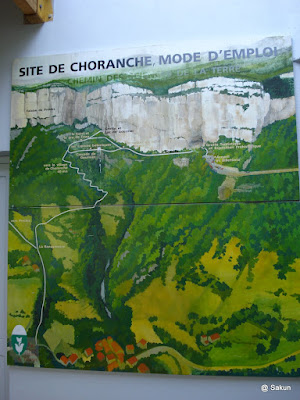
Grotte de Choranche - Visit to the cave of Choranche - 22/5/2009

I visited the cave of Choranche (name in French: Grotte de Choranche) last Friday 22/5/2009 with the family. The cave is located in a chain of mountains called the Vercors. It is about 45 minutes drive from Grenoble.

Inside the cave, it was cold -- it was about 10°c while it was 30°c outside the cave, you can enjoy the view of the natural lakes, rivers and a unusual shape of a specie between white fish and snake known as Olm. This 'fish' is the most intriguing animal of the subterranean world. It has survived from the dinosaurs' era.

For further info about the cave, take a tour at the following website:

www.choranche.com


Some pictures of the visit:


A view from the restaurant near the cave,

Tuesday, May 12, 2009

As I Walk to Prison: Letter from Mu Sochua

A story which makes you understand a bit about how Cambodia is governed by a group of people in power since 1979.

Sakun


The original post was here: http://ki-media.blogspot.com/2009/05/as-i-walk-to-prison-letter-from-mu.html

As I Walk to Prison: Letter from Mu Sochua

2009-05-04
Letter to the Council of Asian Liberals and Democrats (CALD)

Between 1975-1979, over 1.7 million Cambodian women, men and children were killed by the Khmer Rouge- among them my parents. The world community knew about it but watched from afar. Cambodia has come out of genocide and on the road to reconstruction but this stage of reconstruction is stuck and in many ways quickly falling back to point zero. 30 years after the genocide of the Khmer Rouge, Cambodia has made some progress but too small. Over 2,000 innocent Cambodian women die every year of childbirth, at least one million Cambodian children go to bed hungry every night, hundreds of thousands Cambodian children and female youth are ruined in brothels, over 200,000 families have been brutally forced of their land and homes, and over 75% of Cambodia’s forests have now been destroyed. Innocent lives of my people could be saved if justice were served, if top leaders of my broken nation were less greedy, if development were meant for all.

I left Cambodia as an innocent young adolescent because the Vietnam war was approaching and hundreds and thousands of sick, wounded and hungry families were already telling us that Cambodia was lost. I returned home 18 years later with two young children, to a nation in ruins. A new beginning gave us hope when the UN came to help Cambodia organize its first democratic election in 1993. It cost the world community 2 billion dollars. I became a leader in the women’s movement, moving communities and walking the peace walk in city streets and dirt roads to pray for non-violence. I joined politics and became the first woman to lead the women’s ministry that was lead by a man, campaigned nationwide to put an end to human trafficking, authored the draft law on domestic violence, signed treaties with neighboring countries to protect our women and children from being prosecuted as illegal migrants but to receive proper treatment as victims of sex slavery.

I witness violence not as a victim but I listen to hundreds and thousands of women and children speak of the shame, the violation, the soul that is taken away when violence is afflicted on their bodies and on their minds. As a politician I always try to take action, to walk to the villages where life seems to have stopped for centuries, I challenge the top leadership of the government - I question international aid.

Today, I am faced with the real possibility of going to jail because as self-defense I dare to sue the prime minister of Cambodia, a man who has ruled this nation for 30 years. Having been assaulted to the point where I stood half exposed in front of men, by a general I caught using a state car to campaign for the party of the prime minister, I found myself assaulted again, this time verbally by the prime minister who compares me to a woman hustler who grabbed men for attention.

Within days my parliamentary immunity will be lifted so the court can "investigate" my case. This is normal procedure for politicians from the opposition party or human rights activists or the poor who cannot bribe court officials. I will be detained in the notorious prison of "Prey Sar" for as long as the courts wish to take.

Many of my colleagues in the opposition, including my party leader have faced this fate for speaking out.

Cambodia receives close to a billion dollars in 2009 from the international community, the USA contributing close to 60 million. Is the world still watching in silence while Cambodia is now ruled by one man? Is the world afraid to say that its aid is actually taking Cambodia backwards?

Let no Cambodian children go to bed hungry anymore. Let no Cambodian woman be sold anymore.

We must walk tall despite being people bent from the trauma of the Khmer Rouge, which is still a part of us. Let us not let our leaders and the world-community use this trauma to give us justice by the teaspoon.

Let there be real justice.

Mu Sochua
Member of Parliament
Sam Rainsy Party

Mu Sochua is an elected member of the Cambodian parliament and a tireless advocate for women’s rights and the victims of injustice. In 2005, Mu Sochua was nominated for the Nobel Peace Prize for her work against sex trafficking of women in Cambodia and neighboring Thailand. Vital Voices honored Mu Sochua with the 2005 Human Rights Global Leadership Award for her efforts to stem the tide of human trafficking.