Saturday, August 15, 2009

Souvenir from Cambodian Border Camps in 1980s


Below is a beautiful email from Lam Sophan which recalls our memory about our lives in Site 1 and Site 2 camps along the Cambodian-Thai border (1982 - 1989).... Good souvenir!

Thank you Hok for forwarding this email.


Enjoy,
Sakun


________________________________________________________________
> From: huon hok
> Subject: Fw: Hok
> To: "Sakun"
> Cc: "Lam Sophan"
> Date: Wednesday, August 12, 2009, 1:35 PM
> Hi
> Sakun,
>
> Below is the message from Lam Sophan, the tallest guay
> among 68 students and same in the all students in border.
> Please upload somewhere in the the blog when you have
> time.
>
> Best Regards,
> Hok
>


----- Forwarded Message ----
From: Lourm Sayme
To: huon hok
Sent: Wednesday, August 12, 2009 10:26:23 AM
Subject: Re: Hok

Hi Hok! how are you? My family and I are fine. Talking about our past, I feel very lonely. I remember everyone in our boarding school. I remember I didn't have even flip flop when we were in Site one, and I didn't have any money to buy medicine to treat my wound. I remember everyone's belonging is only a backpack that we prepared for emergency all the time. I remember I was so hungry, so I decide to eat dry Kuy's peel on the way from Site one to Dong Rack Camp, test very sweet. I remember the catastrophe created by war. I remember the frustration for our present and future in that time. However, I sometime feel joyful with the funny actions that we had together. One day, a guay shoud've taken some bread to some places else, but he brought us those by mistake. we shoud've eaten those bread together because we were the only group of children who have never had any special meal beside holiday feast, but we took those bread to gamble on soccer. which group won the game, that group would get them all. Hok!, do you still remember everything is belong to COEER? We didn't care much because they were not belong to us. We played soccer. Even our thins were also belong to COEER." Don't worry, just kick it." Finally, we took school's fence to make our cooking fire. And then we had a meeting with Teacher Ket Som art about EVERYTHING'S BELONG TO COEER issue. Aren't those funny? After we moved to Site two Camp, everyone started becoming difference gradually. Smart student moved up to get education abroad or potentially better future, whereas simple student like me stayed far behind. However, it was our past. Now time for us to move on and have fun with our present and future.


Tuesday, August 4, 2009

Fr. Vincent left us one year ago - 4/8/2008

On 4/8/2008, Fr. Vincent left us.


His death was/is very sad to us all. I still remember his funeral as it was yesterday.
I remember his face, his smile, his kindness, his gentleness, ....

I hope he stays in peace where he is.

We all pray for you, especially on this particular day.


Friday, July 17, 2009

Visit of a friend from Japan

At the begining of this month, I was happy to receive a friend, Reasey, from Japan. The last time I accidentally met him was while I visited Cambodia in 1996 in Angkor wat compound in Siem Reap, Cambodia.

After visiting Lyon with Phala in the afternoon of July 3, Saren offered us a delicious dinner at his appartment in Grenoble.


On July 4, we went to visit Annecy, a town close to Geneva. Here are some pictures:


Lunch in one of the restaurants along the river.
Bong Sey told me that he liked the French food but his plate was filled with food when he finished :-)


Saren & Reasey on Le Pont des Amours (Love Bridge)


He looks very young right? :-)


On July 5, we left for Cap d'Agde, a town on the mediteranean sea cost in South of France. Some pictures:


Place Comedie, Montpellier. The town was the departure of Tour de France when we visited


Aigue-morte


Time to say goodbye at AGDE train station

It was really nice to meet a friend like him after a long period living far away from each other. Hope to meet him and other friends soon...

Preah Vihear, a conflict in regard to history


I read recently an interesting article about the conflict over Preah Vihear temple written by a French, who was in Cambodia in 1992 as a UN
peace-keeping force. Here is the article (in English and then in blue in French).

Enjoy

Monday, June 29, 2009

Looking at the Preah Vihear Conflict in the Light of History

Op-Ed by PIERRE-YVES CLAIS

La version francaise se trouve en fin du texte anglais

Reading the English-language press in Bangkok one is frequently surprised by the lack of objective reporting regarding the dispute over the Preah Vihear temple.

As a matter of fact, this Thai press is immensely unbalanced and will even go as far as to say that the Cambodians are the true troublemakers as well as the first to shoot.

A personal fondness I have for truth as well as the friendship I have for Cambodia both urge me to clarify some historic points between these two countries.

Toward the end of the ninth century people coming from Southern China started to establish themselves inside the Khmer Empire to the north of the Dangrek mountain range. They would be known as the Siamese and later on, the Thais.

They progressively strengthened themselves until the area they inhabited became the Thai Kingdom of Ayuthaya.

This Kingdom would destroy Angkor in two waves: Once in 1351 and another time in 1431, each time deporting a large part of the Khmer population and imposing its sovereignty over Cambodia, from which it annexed entire provinces in the years to come.

Like an "Atlantis in waiting," swallowed to the northwest by Siam and to the east by Vietnam, Cambodia was on its way to complete extinction.

Aware of the situation, King Ang Duong solicited in 1853 the intervention of France, which was at that time ruled by Napoleon III.

The Siamese were informed of the alliance about to be made between France and Cambodia and succeeded in making it fail. But in 1863, King Norodom eventually signed a protectorate treaty with France.

The English influence was strong in Siam, but the Franco-British agreement of July 14, 1884 had already recognized the Mekong Basin as a French-owned zone. This would not prevent the Siamese from cutting off the basin and advancing toward Laos.

In 1893, the French had had enough of these gradual advances and sent their warships up the Menam River to Bangkok. France thus blocked any trade from reaching the shores, which obliged the Siamese court to renounce all of their claims to the left bank of the Mekong River. Meanwhile, France kept the provinces of Chantaboun and Paknam as hostages. Some French naval troops occupied these regions until the Convention of 1904 gave back the Province of Koh Kong and Steung Treng to Cambodia. Other areas included Melou Prei and Tonle Repou, which were left by Siam to Laos and finally given back to Cambodia by France.

The Convention of 1904 led to the Treaty of 1907, which was drawn up by France and Siam, where in exchange for the return of the provinces of Trat, Chantaboun and the territory of Dan Sai, which is in the current province of Loei, King Chulalongkorn of Siam (Rama V) left the provinces of Battambang, Sisophon and Siem Reap to France, who gave them back to Cambodia.

When King Sisowath was finally able to go to Angkor and repossess a land that had always been undoubtedly Khmer, he declared that this was the biggest glory of his reign.

But the Siamese would not give up.

Taking advantage of the French defeat against Germany during World War II, the Siamese immediately violated the pact of non-aggression signed with France on June 12, 1940.

The Thai Prime Minister, Field Marshall Phibun Songkhram, organized a series of nationalist and anti-French demonstrations in Bangkok. Then, the border disputes multiplied in number along the banks of the Mekong. During daytime, the Thai air force, superior in number, bombed Vientiane, Sisophon and Battambang without any objection from abroad. The French air force attempted to strike back, but the damage inflicted was minimal.

In December 1940, Thailand then occupied the provinces of Pak-Lay and Bassac. At the beginning of January 1941, Bangkok men launched an offensive on Laos and Cambodia. The Franco-Indochinese resistance was in place, but the majority of the military units were overwhelmed by the better-equipped Thai forces (20 French tanks vs. 134 Thai tanks.)

The Thais quickly occupied Laos.

However, French resistance in Cambodia was more resilient. By Jan 16, France launched a large counter attack led by the 5th REI (a regiment belonging to the French Foreign Legion) on the villages of Yang Dang Khum and Phum Preav, where the fiercest fighting of the war took place.

The French counterattack was blocked and ended in a retreat, but the Thais could no longer pursue the French forces as their tanks had been nailed to the ground by the French anti-tank canons. For lack of means, these very canons had been pulled by buffaloes to the battlefield.

As the ground situation was critical for France, Admiral Decoux gave the green light to execute an operation against the Thai Navy. The order was given to the available French navy to attack the Gulf of Thailand. On the morning of Jan 17, 1941, "the Provisional Group" (a force assembled for that very occasion) attacked the Thai Navy at Koh Chang. Although the Thai ships were far superior in number, the operation of the French navy managed to bring home a comprehensive victory.

After the battle, a large part of the Thai navy was destroyed. But on January 24, the final air battle took place while a Thai air raid attacked Siem Reap Airport.

Japan intervened quickly in the conflict in favor of the Thais and imposed an armistice followed by a peace treaty causing France to relinquish the Cambodian provinces of Battambang, Siem Reap as well as the Lao provinces of Champassak and Sayaburi on May 9. These territories were more than 50,000 km squared in size and inhabited by 420,000 people.

These territories annexed from Cambodia were, however, handed back by Thailand on November 1947 under international pressure (Treaty of Washington).

But from 1953, although Cambodia had only just achieved its independence from France, Thai troops invaded Preah Vihear and hoisted their national flag above the temple. Nine years later in 1962, the clever mind of then-Prince Norodom Sihanouk paved the way for obtaining an international decision at the International Court of Justice in The Hague and the Thais were obliged to retreat from the Khmer temple.

Unfortunately, the respite would be short lived: War broke out shortly after and Preah Vihear was again in the mix, the temple being occupied by successive armies fighting each other.

A little while after the defeat of the Khmer Rouge in 1979, Thailand was submerged with Cambodian refugees and, to show to the world that it couldn't cope without international aid Thailand planned what could be considered a staged atrocity.

On the morning of Friday June 8, 1979,110 trucks parked in front of the Nong Chan Refugee Camp, which housed tens of thousands of Cambodian refugees.

Thai officials told the refugees that they were going to be transferred to another, better equipped camp. In reality, these survivors of the Khmer Rouge genocide were being sent back to hell.

Far away from Nong Chan, the site of Preah Vihear had been chosen with a precise goal: To seek revenge for the loss of the temple in 1962. With a high cliff covered in jungle and thousands of land mines laid around the temple, the outcome of the forced expulsion of those thousands of Cambodian refugees could be guessed easily.

The unfortunate refugees were taken out of the trucks under the constant threat of weapons. Horrible scenes took place. All night long, truckloads after truckload of Cambodians were pushed – after first being despoiled of all their possessions – like livestock between two rows of soldiers through a narrow passage. The soldiers used their weapons as sticks and shot at those who refused to file down the narrow passage.

Terrorized by the thought of stepping on one of the many mines, laid previously there by the Khmer Rouge, the refugees desperately attempted to stay on the track. But the Thais continuously pushed more refugees along the path and people were forced to walk through the minefields.

Both thirsty and hungry, the survivors of this atrocity needed three days to cross the immense mine field filled with decaying corpses and injured victims squirming in pain.

One estimates that over 45,000 Cambodians were forced out of Thailand in this manner. For several days, the refugees were transported into hell by a huge number of trucks that dumped them at Preah Vihear. It is still impossible to evaluate the number of casualties from this expulsion, as the Khmer Rouge who waited to greet the refugees did not keep records.

All too often this awful page of history is ignored, one retains only this "Amazing Thailand" image in today's tourist brochures.

The wrongdoings of the Thais against the Khmers should be remembered, not to set the two populations against each other but so that justice can at last be achieved.

Let it be said that Cambodians don't attack anyone. They know too well that the balance of power is not in their favor. Still they vow to defend their country through courage and determination-they have no other choice.

But Thailand has too many internal political problems not to try and exploit the myth of a "sacred national alliance" against its barbaric neighbors, and the deaths of the past will change nothing in it.

This historical tragedy is unfortunately far from over and there is no happy ending in sight.

The Americans dislike Prime Minister Hun Sen too much to pressure their Thai partners into a peaceful solution. And it is unlikely that the French will send their warships against Bangkok again...

Pierre-Yves Clais was a former UN peacekeeper in Cambodia (1992). He currently owns Terre Rouge Lodge with his wife in the Ratanakiri.
------------
Preah Vihear, le conflit au regard de l’Histoire.

Mardi, 23 Juin 2009

À la lecture de la presse anglophone de Bangkok, on est fréquemment surpris d’un manque patent de neutralité quant à l’affaire du temple de Préah Vihear.

Le parti de la Thaïlande y est pris sans nuance et l’on va jusqu’à affirmer que les Cambodgiens seraient les véritables fauteurs de troubles, tout comme les premiers à tirer…
Le souci de vérité tout comme l’amitié que j’ai pour le Cambodge me forcent ici à tenter de clarifier quelques points d’histoire concernant les rapports entre les deux pays.

Provenant de Chine méridionale, c’est vers la fin du IXe siècle que ceux qui allaient devenir les Siamois, puis les Thais, commencent à s’établir sur les marches septentrionales de l’empire khmer, au nord de la chaîne des Dangreks.Ils se renforcent progressivement jusqu’à devenir le Royaume Thaï d’Ayuthaya qui saccagera Angkor à deux reprises en 1351 et 1431, déportant chaque fois une grande partie de la population khmère et imposant sa suzeraineté sur le Cambodge, dont il annexera au fil du temps des provinces entières.

« Atlantide en sursis », avalé au Nord Ouest par le Siam et à l’Est par le Vietnam, le Cambodge allait tout bonnement disparaître. Conscient de cela, le roi Ang Duong sollicita en 1853 l'intervention de la France de Napoléon III. Mis au courant, les Siamois firent échouer ce traité d'alliance et c’est le fils d’Ang Duong, le Roi Norodom, qui signera finalement en 1863 ce traité de Protectorat avec la France.

L’influence des Anglais était forte sur le Siam, mais l’accord franco-britannique du 14 juillet 1884, avait reconnu comme « zone française » le bassin du Mékong, ce qui n’empêcha pas les Siamois de couper ledit bassin et de s’avancer à travers le Laos. Ces empiètements répétés conduisirent, en juillet 1893, une flottille française à remonter le Ménam jusqu’à Bangkok. La France fit alors le blocus des côtes, ce qui obligea la cour du Siam à renoncer à toute revendication sur la rive gauche du Mékong tandis que nous gardions en otage les provinces de Chantaboun et de Paknam. Des troupes de la marine occupèrent ces régions jusqu’à la Convention de 1904 qui rendait au Cambodge la province côtière de Koh Kong ainsi que celle de Steung Treng, assorties des régions de Melou Preï et Tonle Repou, territoires cédés par le Siam au Laos et réintégrés au Cambodge par la France.

Cette Convention de 1904 conduisit au Traité de 1907, où, contre retour au Siam des provinces de Trat, Chantaboun et du territoire de Dan Sai dans l’actuelle province de Loei, le Roi Chulalongkorn (Rama V) abandonnait à la France, qui les rétrocédait au Cambodge, les provinces de Battambang, de Sisophon et de Siem Reap.
Lorsque le Roi Sisowath pu finalement se rendre à Angkor reprendre possession de ces terres indubitablement khmères il déclara que c’était là « la plus grande gloire de son règne ».

Mais les Siamois ne renoncèrent jamais, profitant de la défaite française face à l’Allemagne lors de la seconde guerre mondiale, ils violent immédiatement le pacte de non-agression signé avec la France le 12 juin 1940.

Le Premier ministre thaïlandais Phibun organise alors une série de manifestations nationalistes et anti-françaises à Bangkok, puis des escarmouches frontalières se succèdent le long du Mékong. L’aviation thaïlandaise, supérieure en nombre, bombarde de jour Vientiane, Sisophon, et Battambang en toute impunité. Les forces aériennes françaises tentent des raids en représailles, mais les dégâts causés sont bien moindres. En décembre 1940, la Thaïlande occupe Pak-Lay et le Bassac.

Début janvier 1941, Bangkok lance une offensive sur le Laos et le Cambodge. La résistance franco-indochinoise est en place, mais la plupart des unités sont surpassées par les forces thaïlandaises, mieux équipées (20 chars côté français, 134 côté siamois). Les Thaïlandais occupent rapidement le Laos, alors qu’au Cambodge la résistance française est meilleure.

Le 16 janvier, la France lance une large contre-offensive menée par le 5e REI (Régiment Etranger d’Infanterie) sur les villages de Yang Dang Khum et de Phum Préav, où se déroulent les plus féroces combats de la guerre. La contre-attaque est bloquée et s’achève par une retraite, mais les Thaïlandais ne peuvent poursuivre les forces françaises, leurs blindés ayant été cloués au sol par les canons anti-char français (qui, faute de moyens adéquats, avaient été tractés sur place par des bœufs). Alors que la situation à terre est critique pour la France, l’amiral Decoux donne le feu vert pour exécuter une opération contre la marine thaïlandaise. L'ordre est donné aux navires de guerre disponibles d’attaquer dans le golfe de Thaïlande. Au matin du 17 janvier 1941, le « groupe occasionnel » attaque les navires thaïlandais à Koh Chang. Bien que la flotte ennemie la surclasse largement en nombre, l'opération de la marine française, s'achève par une victoire complète. À l'issue du combat, une bonne partie de la flotte de guerre thaïlandaise est détruite. Mais, le 24 janvier, la bataille aérienne finale a lieu lorsque l’aéroport de Siem Reap est atteint par un raid des bombardiers thaïlandais.

Le Japon intervient rapidement dans le conflit au profit des Thaïs, impose un armistice, puis un traité de paix, le 9 mai, par lequel la France abandonne les provinces cambodgiennes de Battambang et Siem Reap, ainsi que les provinces laotiennes de Champassak et Sayaburi, soit un territoire de plus de 50 000 km2 habité par 420 000 personnes.

Les territoires annexés au Cambodge ne seront restitués par la Thaïlande, sous pression internationale (traité de Washington), qu'en novembre 1947.

Mais dès 1953, alors que le Cambodge accède à peine à l’indépendance, des troupes thaïes investissent Préah Vihear, en chassent les fonctionnaires khmers et hissent leur drapeau national. Neuf ans plus tard, en 1962, l’habileté consommée du prince Sihanouk permit d’obtenir une décision internationale de justice et les Thaïs durent faire marche arrière, mais le répit allait être de courte durée, la guerre arrivait et Préah Vihear y serait engouffré.

Passons sur les occupations successives du site par les armées en conflit, la reddition des dernières troupes de Lon Nol aux Khmers rouges en mai 1975, le pire moment de son histoire fut un effroyable holocauste orchestré il y a trente ans par l’armée thaïlandaise elle-même !

Peu après la défaite des Khmers rouges en 1979, la Thaïlande fut submergée de réfugiés cambodgiens et pour démontrer au monde qu’elle ne pouvait seule sans argent gérer ce phénomène, elle planifia une atroce mise en scène. Au matin du vendredi 8 juin 1979, 110 bus se rangèrent devant le camp de Nong Chan qui abritait des dizaines de milliers de réfugiés cambodgiens. On leur déclara qu’ils allaient être transférés dans un camp plus à même de les recevoir et tous ces survivants du génocide Khmer rouge furent renvoyés en enfer…

Fort éloigné de Nong Chan, le site de Préah Vihear avait été choisi à dessein, on se vengeait de la perte du temple en 1962. Une falaise abrupte couverte de jungle, des mines par milliers, l’issue ne faisait pas de doute…

Comprenant ce qui allait se passer, les malheureux réfugiés durent être sortis des bus sous la menace des armes. Des scènes horribles eurent lieu : arrivés de nuit, bus après bus, les Cambodgiens furent poussés comme du bétail entre deux rangées de militaires sur un étroit chemin, non sans avoir été dépouillé de tout l’argent qu’ils possédaient. Les militaires maniaient leurs armes comme des bâtons et tiraient sur ceux qui refusaient de descendre le chemin. Terrorisés à l’idée de sauter sur les mines innombrables (posées par les Khmers rouges quatre ans auparavant), les réfugiés tentaient par tous les moyens de rester sur le chemin, mais plus haut, on poussait sans cesse de nouveaux malheureux et les gens étaient finalement forcés de marcher dans le champ de mines. Il fallut trois jours aux survivants pour traverser cette étendue de mort, de soif et de faim au milieu des cadavres en putréfaction et des blessés se tordant de douleur. On estime à quarante-cinq mille le nombre de Cambodgiens ainsi expulsés. Pendant plusieurs jours, ils furent convoyés en enfer par une noria de bus, mais il est impossible d’estimer le nombre des victimes, les Khmers rouges n’ont pas tenu de registre…

On ignore trop cette affreuse page d’histoire pour ne retenir que cette « Amazing Thailand » des brochures touristiques. Les torts des Thaïs à l’encontre des Khmers doivent être rappelés, non pour dresser à nouveau les peuples les uns contre les autres, mais pour que justice soit enfin rendue.

Les Cambodgiens n’agressent personne, ils sont trop conscients du déséquilibre des forces en présence, il n’y a de leur part que du courage et de la détermination à défendre leur pays, mais la Thaïlande a trop de problèmes intérieurs pour ne pas tenter d’exploiter le mythe de l’Union Sacrée contre la barbarie du voisin, les morts du passé n’y changeront rien.

Cette tragédie est malheureusement loin d’un heureux dénouement, les Américains détestent trop Hun Sen pour raisonner leurs partenaires thaïs, et quant aux Français, il est peu probable qu’ils enverront une fois de plus des canonnières devant Bangkok…

Pierre-Yves Clais
Ancien Casque Bleu au Cambodge (1992)


Saturday, June 20, 2009

In memory of Fr. Charles Dierckx

Fr. Charles Dierckx left us on 24/4/2009.


All friends from around the globe pray for him and say thank you for what he has done. We pray he would join his lovely brother Fr. Vincent in a peaceful world. We hope he has found a good new life...

The last time I met him was at the funeral of his brother Fr. Vincent in August 2008. Even with great pain of the lost of his brother, he came to welcome warmly everyone. He had good words to everyone.

We met him in Site 2 camp where he came to visit his brother Vincent during his vacations. At the first glance to his face during our first meet in SITE 2, we felt comfortable with him and he knew how to make us confortable. He tried to make his possible to make us forget even a second our difficult and "narrow" life in the camp. He brought us news from Europe and the world. As displaced people, we had no country (it was occupied by the Vietnamese), no job, no future, lived in a big prison called SITE 2, had little contact with the world. The only thing which remained was the HOPE (and our diginity) that one day we can get out of this hell camp to go abroad or back to our country, free of foreign oppression. So each of his visit was a kind of distraction, brought in hope and made us felt that in the world, there were some people who knew us and were sensible to our lives.


Site 2 camp.
From left to right: Rattanak, Fr. Charles, Sovann, Maren and Hok


Tapraya, Thai Village near Site 2.
Fr. Vincent, Fr. Charles, Marie-Claire


Fr. Pierre Ceyrac, Fr. Vincent and Fr. Charles

Later, some months after I arrived in France, he came to visit me and Sakal with Fr. Vincent in Grenoble. It was a very recomforting visit and I never forget his goodness. He was happy to see the begining of my new life in France and encourged me to study. He told me: now that you are in France, you should never forget that you are Khmer and are proud to be born as Khmer. Those who ignore their origines lost their identity (we can easily understand that some people try to forget their origines after the hard lives in their countries).

Two pictures with Fr. Charles and Fr. Vincent in Grenoble in end 1989/1990.


His last pictures I took at Fr Vincent's funeral:


Fr. Charles left behind her sister(picture below). We wish her good courage and a confortable life. She can be proud of the accomplish actions of his brothers on earth.


Stay in peace father in your new life.
Our condolences to the family.


Some of condolence emails from friends


--

Sakun, again, we lost Fr. Charles. Most great people leave us. Therefore we are so very sorry that we lost those people but however they are now in another good world better than us i hope.
Maren from New York City.


--

Hi Kun,

Sorry to hear that again! and I am sorry for late response due to I did not log in my yahoo for some times ago.

This is also the big lost for us enen though he did not so close to us while his brother, father Vincent did. The kind blood connection at least we have to think of!!

Pray for him to have whatsoever he wishes, especially to meet his brother, father Vincent in somewhere we could not know!

Best Rgds
Hok and families


--

I'm Sorry for long times no contact you and our friends. I'm really so sad
to know Farther Vincent and his Brother lost for us. I only pray for his
both with peacefull and happiness in his heaven place.
See you! REASEY,


Monday, June 8, 2009

Looking for Buth Sophat

A friend asked me to find his friend who has been in France since 1984. If you know him, please let me know.

Thanks in advance.

Sakun

-------------Info about the people we are looking for ----------------

- Name: Buth Sophat (Mr.)
- Live in France since 1984
- Last known address: 15 Bd J. Kennedy, 51.000 Chalon/manes, FRANCE

Email from the person, Kong Bunthan, who looks for Buth Sophat:

I am enclosed a picture when we were taking at Kampucher-Thai border camp, Sdock Kaok Thom temple (Wat Prasat), now the temple belong to Thai (Thai took it since 1992) after Khmer refugee were repatriated to Cambodia. In the picture my friend is wearing a yellow shirt, the girl is his sister, and I am wearing a black jacket. The other is photographer.


Wednesday, May 27, 2009

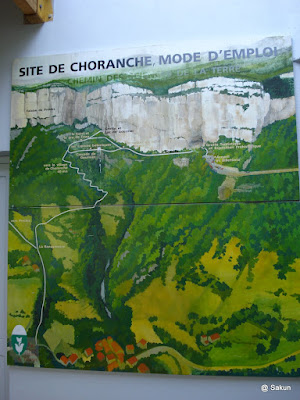
Grotte de Choranche - Visit to the cave of Choranche - 22/5/2009

I visited the cave of Choranche (name in French: Grotte de Choranche) last Friday 22/5/2009 with the family. The cave is located in a chain of mountains called the Vercors. It is about 45 minutes drive from Grenoble.

Inside the cave, it was cold -- it was about 10°c while it was 30°c outside the cave, you can enjoy the view of the natural lakes, rivers and a unusual shape of a specie between white fish and snake known as Olm. This 'fish' is the most intriguing animal of the subterranean world. It has survived from the dinosaurs' era.

For further info about the cave, take a tour at the following website:

www.choranche.com


Some pictures of the visit:


A view from the restaurant near the cave,

Tuesday, May 12, 2009

As I Walk to Prison: Letter from Mu Sochua

A story which makes you understand a bit about how Cambodia is governed by a group of people in power since 1979.

Sakun


The original post was here: http://ki-media.blogspot.com/2009/05/as-i-walk-to-prison-letter-from-mu.html

As I Walk to Prison: Letter from Mu Sochua

2009-05-04
Letter to the Council of Asian Liberals and Democrats (CALD)

Between 1975-1979, over 1.7 million Cambodian women, men and children were killed by the Khmer Rouge- among them my parents. The world community knew about it but watched from afar. Cambodia has come out of genocide and on the road to reconstruction but this stage of reconstruction is stuck and in many ways quickly falling back to point zero. 30 years after the genocide of the Khmer Rouge, Cambodia has made some progress but too small. Over 2,000 innocent Cambodian women die every year of childbirth, at least one million Cambodian children go to bed hungry every night, hundreds of thousands Cambodian children and female youth are ruined in brothels, over 200,000 families have been brutally forced of their land and homes, and over 75% of Cambodia’s forests have now been destroyed. Innocent lives of my people could be saved if justice were served, if top leaders of my broken nation were less greedy, if development were meant for all.

I left Cambodia as an innocent young adolescent because the Vietnam war was approaching and hundreds and thousands of sick, wounded and hungry families were already telling us that Cambodia was lost. I returned home 18 years later with two young children, to a nation in ruins. A new beginning gave us hope when the UN came to help Cambodia organize its first democratic election in 1993. It cost the world community 2 billion dollars. I became a leader in the women’s movement, moving communities and walking the peace walk in city streets and dirt roads to pray for non-violence. I joined politics and became the first woman to lead the women’s ministry that was lead by a man, campaigned nationwide to put an end to human trafficking, authored the draft law on domestic violence, signed treaties with neighboring countries to protect our women and children from being prosecuted as illegal migrants but to receive proper treatment as victims of sex slavery.

I witness violence not as a victim but I listen to hundreds and thousands of women and children speak of the shame, the violation, the soul that is taken away when violence is afflicted on their bodies and on their minds. As a politician I always try to take action, to walk to the villages where life seems to have stopped for centuries, I challenge the top leadership of the government - I question international aid.

Today, I am faced with the real possibility of going to jail because as self-defense I dare to sue the prime minister of Cambodia, a man who has ruled this nation for 30 years. Having been assaulted to the point where I stood half exposed in front of men, by a general I caught using a state car to campaign for the party of the prime minister, I found myself assaulted again, this time verbally by the prime minister who compares me to a woman hustler who grabbed men for attention.

Within days my parliamentary immunity will be lifted so the court can "investigate" my case. This is normal procedure for politicians from the opposition party or human rights activists or the poor who cannot bribe court officials. I will be detained in the notorious prison of "Prey Sar" for as long as the courts wish to take.

Many of my colleagues in the opposition, including my party leader have faced this fate for speaking out.

Cambodia receives close to a billion dollars in 2009 from the international community, the USA contributing close to 60 million. Is the world still watching in silence while Cambodia is now ruled by one man? Is the world afraid to say that its aid is actually taking Cambodia backwards?

Let no Cambodian children go to bed hungry anymore. Let no Cambodian woman be sold anymore.

We must walk tall despite being people bent from the trauma of the Khmer Rouge, which is still a part of us. Let us not let our leaders and the world-community use this trauma to give us justice by the teaspoon.

Let there be real justice.

Mu Sochua
Member of Parliament
Sam Rainsy Party

Mu Sochua is an elected member of the Cambodian parliament and a tireless advocate for women’s rights and the victims of injustice. In 2005, Mu Sochua was nominated for the Nobel Peace Prize for her work against sex trafficking of women in Cambodia and neighboring Thailand. Vital Voices honored Mu Sochua with the 2005 Human Rights Global Leadership Award for her efforts to stem the tide of human trafficking.


Friday, April 3, 2009

A new clash between Thailand and Cambodia on April 3. 2009

The clash happened at the same place Veal Entry, near Preah Vihear, as in last October 2008 as the result of unresolved border demarcation issue. Both sides have promised to resolve the border issue peacefully but nothing has been done so far except talking and talking. Thailand's side has been busy with its own internal affair and Preah Vihear is a hot subjet to Thai government. Many Thais still consider that Preah Vihear belongs to Thailand even it is clearly Cambodian temple. The international court gave reason to Cambodia in 1962.

The strange thing is that gunfire erupted when the Thai government is in difficulty with its own internal affair. The current Thai government faces pressure from the Red T-Shirt protesters who want the government fall. When the gunfire erupted lin october 2008, the then government were under pressure from the Yellow T-Shirt protesters.

Thai soldiers
The war is so a sort of diversion game the Thailand government does in the hope that it can remain longer in power.

On military aspects, Thailand is far more well equipped (by the US) than Cambodia. Thailand has modern guns, modern jet fighters, modern helicopters, ... Cambodia is poorly equiped with old guns from the civil war, some old Russian made helicopters, a couple of old jet fighters that cost too much to maintain, ....


Cambodian soldiers
But Cambodian soldiers are highly motivated to protect their land. Some (if not most) of them are former Khmer Rouge soldiers and they look for a mission to accomplish. When I visited Cambodia last February, I met a military doctor from Preah Vihear. According to him, Khmer soldiers were "happy" of the war because the government took care of them, they had enough and delicious food, they felt they did something to protect Cambodia and the majority of Cambodians support them (the soldiers). He said that villagers living near Preah Vihear brought them chickens, cows, ....

Anyway, war is not a solution. I hope that the border issue will be resolved peacefully soon and Cambodians and Thais can live along together as good neighbors.


God bless Cambodia and its soldiers

------------------------------------------------------------------------------------------------
Some articles from the net.....
------------------------------------------------------------------------------------------------

Saturday, April 04, 2009

Two Thai soldiers killed in Cambodia border clash: army

BANGKOK, April 3, 2009 (AFP) - Two Thai soldiers were killed and another 10 wounded in a border clash with Cambodian forces on Friday, army officials said, updating an earlier toll.

One of the soldiers died at the site of the clash near a disputed 900-year-old temple and the other died later in hospital, said regional Thai army spokesman Lieutenant Colonel Wichit Makarun.

The toll was confirmed by a second army official speaking on condition of anonymity, who added that the military was already sending the bodies back to their home towns.

Soldiers exchanged rocket, machinegun and mortar fire near the 11th-century Preah Vihear temple on the frontier, following a brief skirmish earlier in the day, officials from both sides said.

The area was the scene of several clashes last year after Cambodia successfully applied for United Nations world heritage status for the ruins in July, with four soldiers killed in a battle there in October.


-----------------------------------------------------------------------------------------------
Article du Cambodgesoir: http://www.cambodgesoir.info/content.php?itemid=35661&p=

Accrochages khméro thaïs : la version officielle
04-04-2009
En attendant les déclarations du Premier ministre Hun Sen, qui devraient être rendues publiques dans l’après-midi, le ministère des Affaires étrangères cambodgien vient publier un communiqué officiel résumant les derniers événements dans la zone frontalière de Preah Vihear.

Selon les officiels cambodgiens, un soldat thaïlandais a sauté sur une mine dans la zone de Veal Intry, située 500 mètres à l’intérieur du territoire cambodgien, le 2 avril au matin. Après l’incident, plusieurs de ses camarades ont alors cherché à retourner à l’endroit concerné pour récupérer des armes et des indices. Ils ont essuyé des tirs de la part des soldats khmers et se sont repliés.
Le 3 avril, un nouveau groupe de soldats thaïlandais a pénétré sur le territoire cambodgien. De nouveaux échanges de tirs ont eu lieu. Une rencontre entre les deux commandants en charge a ensuite été organisée dans la pagode Keo Sikkha Kiri Svara pour résoudre le problème sans faire usage de la force. Toutefois, de nouveaux affrontements ont eu lieu dans l’après-midi et des armes lourdes ont été utilisées. Le marché situé au bas de l’escalier principal a été brûlé et le bureau de l’Autorité nationale pour Preah Vihear, situé à proximité du temple, a été détruit par les tirs. Aucun mort ne serait toutefois à déplorer côté cambodgien.
Le ministère des Affaires étrangères insiste par ailleurs sur le fait que la mine qui a explosé était située nettement à l’intérieur du territoire cambodgien et que les intrusions thaïlandaises constituent une violation des accords internationaux et bilatéraux signés sur cette question frontalière.
Le gouvernement du Cambodge exprime ses regrets et réaffirme que les soldats khmers n’ont réagit en situation de légitime défense. Il souhaite plus que jamais régler cette dispute frontalière par la négociation.

Friday, March 27, 2009

Cambodian cooking lesson from Las Vegas

A small video took during my visit to Samphal & Sophorn in Las Vegas in April 2008.

You can admire the talent of the cook Sophorn :-)

Saturday, March 21, 2009

Weddings

Wedding pictures from Site 2 and Cambodia...